The Cursed Dinosaur Isle: Game
- 4.4
- Rating
- 1.00M
- Installs
- Free
- Price

 Analysis by App-foxy
The most important thing to understand about The Cursed Dinosaur Isle: Game is that its appeal comes from survival under constant pressure. This is not simply a dinosaur-themed sightseeing game. It places me in a Jurassic setting where carnivores are always part of the problem, so every decision feels connected to staying alive. I have to think about movement, risk, and timing rather than treating the island as a harmless playground.
That focus makes it an interesting choice for players who enjoy simulation games with a threatening environment. The game is free to start, belongs to the simulation category, and is made by The Ancient Isle of Dinosaur - Games Studio. It has attracted over 1 million installs, which suggests that the basic idea has found a sizeable audience. After spending time with it, I see why: the dinosaur setting is familiar, but the survival angle gives ordinary exploration a sharper edge.
The experience is aimed at Teen players, and that rating makes sense in the context of an environment built around predators and danger. I would not recommend it to someone looking for a calm dinosaur collection game or a purely decorative island builder. Its strongest quality is the feeling that the environment can turn against me quickly.
You May Also Like

 Blood Strike: 2.5 Anniversary
Blood Strike’s Loadouts Turn Every Drop Into a Tactical Gamble
A close look at Blood Strike’s custom loadouts: how fast access to signature weapons reshapes its battle royale rhythm, rewards preparation, and narrows the gap between fights.

 Pandora - Music & Podcasts
Pandora’s Music Is Easy to Start, but Harder to Recover
Pandora’s strength is its low-effort path from a seed to a station. Its weak spot is how much confidence it asks you to place in connection, setup, and quiet recovery.

 8 Ball Pool
 Is Built on Rivalries, Rematches, and Routine
A close look at the rivalries, rematches, shared routines, and unanswered safety questions that turn a quick pool match into a persistent mobile community.

 Samsung Music
’s Quiet Strength Is Playing What You Already Own
Its reach comes less from spectacle than from dependable access to a personal library. That simplicity is both the app’s strongest retention engine and its ceiling.

 AccuWeather: Weather Radar
AccuWeather Review: A Quick, Clear Forecast for Everyday Decisions
For everyday plans, the best forecast is the one you can understand quickly. AccuWeather makes rain timing, radar, and local conditions easy to act on, with a few trade-offs.

 Hill Climb Racing
Why Hill Climb Racing Still Turns Crashes Into One More Run
A tiny car, a bumpy hill and one more upgrade: Hill Climb Racing keeps resurfacing because its simple chaos makes every near-miss feel personal.
More From Our News Desk



Survival is the feature that shapes everything
I find that survival here is less about rushing toward a big payoff and more about choosing a manageable goal, then judging whether the route is worth the risk. That makes each session useful even when I decide to turn back: I learn how the island rewards patience and where my own appetite for danger sits. The next section looks at how those choices translate into a sense of progress.
Why the dinosaur setting feels different here
Many dinosaur games use prehistoric creatures as decoration, opponents, or collectible attractions. Here, the central capability is more specific: I am trying to survive in a world where carnivores are an ongoing environmental threat. That changes how I approach even simple progress. Instead of rushing toward every visible objective, I pay attention to whether the route is safe and whether I am moving into a situation I can handle.
This sounds straightforward, but it has a practical effect on the rhythm of play. The island becomes something I read rather than merely cross. I watch for danger, avoid unnecessary exposure, and treat exploration as a series of calculated choices. That makes the game feel more involved than a standard dinosaur-themed time filler, especially when I am already familiar with the usual pattern of collecting resources and tapping through upgrades.
The survival focus also gives the setting a useful sense of identity. The Jurassic period is not just a visual backdrop; it is the reason the game’s main tension works. A carnivore in this world is not an occasional interruption to a peaceful routine. It is a reminder that the environment has its own priorities, and my progress depends on adapting to them.
How I approach a new session
When I begin playing, I try not to spend the first moments acting as if speed is automatically best. A safer approach is to learn the immediate surroundings before committing to a longer route. I look at where I am going, consider whether I have an easy way back, and avoid turning a small objective into a dangerous detour.
This is one of the less obvious lessons of the game: survival progress is often about reducing bad decisions, not chasing every opportunity. If I treat every nearby point of interest as mandatory, I create more chances to meet danger without necessarily improving my position. A slower route can be more valuable when it preserves the ability to continue playing instead of forcing a risky recovery.
I also find it useful to separate short-term movement from long-term progress. A tempting destination may look worthwhile, but the better question is whether reaching it helps my next decision. This mindset is especially helpful on a phone, where I may only have a few minutes to play. A compact, controlled session feels more satisfying than a rushed attempt that ends because I ignored the island’s threats.
What the survival loop demands from the player
The game rewards attention more than passive repetition. I cannot simply rely on the dinosaur theme to carry the experience. I need to make choices about when to explore, when to stay cautious, and when a possible reward is not worth the danger. That gives the simulation label some meaning: the game asks me to respond to a hostile setting rather than simply admire it.
There is also a useful tension between curiosity and caution. Exploring is part of the appeal, but exploration carries a cost when predators are nearby. If I play too defensively, progress can feel slow. If I move too aggressively, I can lose control of the situation. Finding the middle ground is where much of the enjoyment comes from.
For that reason, I would describe the game as more suitable for players who like making small tactical decisions than for people who want a completely predictable routine. It does not need complicated controls to create pressure. The setting and the threat are enough to make ordinary movement feel meaningful.
A realistic everyday use case
Imagine having ten minutes during a commute or while waiting for an appointment. This is a reasonable game to open if I want a self-contained survival challenge rather than a long story scene that demands uninterrupted attention. I can enter with a simple goal, assess the immediate area, and decide whether to continue or stop before the session becomes too involved.
That short-session use works best when I accept that not every launch needs to produce dramatic progress. Sometimes the useful result is learning which choices create trouble. I may finish a session without reaching the most attractive destination, but I have still improved my understanding of how cautiously I need to play.
On the other hand, the same structure may frustrate someone who expects every brief session to deliver a large reward. The game’s tension depends on risk, and risk naturally means that some attempts feel less productive than others. I see that as part of the design rather than a flaw, but it is important to know before installing it.
The trade-off between exploration and safety
The clearest trade-off is simple: the more freely I explore, the more opportunities I create for danger. Staying conservative protects a run, but it can also make the island feel less exciting. Moving farther and taking more chances can produce a stronger sense of discovery, yet it increases the possibility that one poor decision will undo the value of the session.
I recommend treating this as a game of controlled curiosity. I do not need to avoid every risk; I need to choose risks that teach me something or support a clear objective. Wandering merely because a route is available is usually weaker than exploring with a reason. This approach makes the survival theme feel more deliberate and prevents the game from becoming a sequence of random escapes.
Another trade-off involves patience. A player who enjoys careful observation will probably get more from the island than someone who wants immediate action. The game’s atmosphere works because threats influence my decisions before they necessarily become direct confrontations. If I ignore that layer and play as quickly as possible, I lose much of what makes this particular dinosaur game distinctive.
Where it differs from familiar simulation alternatives
Compared with peaceful dinosaur park or creature-management games, this one puts less emphasis on comfort and presentation. The central question is not only how to develop or enjoy a prehistoric setting, but how to function inside one that is dangerous. That makes it a better fit for players who want tension alongside simulation elements.
It also differs from action-focused dinosaur games. In a purely action-oriented alternative, the fun may come from defeating enemies directly and moving rapidly from one encounter to the next. Here, I am more interested in the decisions that happen before danger becomes unavoidable. Avoidance, timing, and route selection matter because the island itself is part of the challenge.
Players who prefer a relaxed builder, a story-heavy adventure, or a predictable idle game may find other options more satisfying. Those alternatives are better when I want to make steady progress without worrying about hostile creatures changing the value of a route. This game earns its place by offering pressure, not by trying to replace every other dinosaur genre at once.
Small habits that make the experience better
My first practical tip is to establish a return plan before moving toward an uncertain area. It is easy to focus on the destination and forget that survival depends on what happens afterward. Thinking about the way back helps me avoid turning a successful discovery into an unnecessarily dangerous continuation.
Second, I avoid spending all my attention on the most obvious attraction. The most visible point is not automatically the best choice, and pursuing it immediately can narrow my options. I get better results when I use the surrounding space to understand the situation first.
Third, I treat failed attempts as information rather than wasted time. A dangerous encounter can reveal that I moved too quickly, chose a poor route, or underestimated the environment. This is a more productive way to play than repeating the same approach and hoping the result changes.
Finally, I suggest using shorter goals when playing on a phone. Instead of expecting to master the entire island in one sitting, I choose a manageable purpose: explore a nearby area, test a route, or learn how much risk I can handle. This keeps the game approachable and makes the survival loop easier to appreciate.
Free access and the role of in-app purchases
The game is free, which makes it easy to try without committing money at the start. That is valuable for a niche survival simulation because the appeal depends heavily on whether I enjoy its particular pace. I can discover that for myself rather than relying only on the dinosaur theme.
There are in-app purchases ranging from $1.99 to $10.99 per item. I would therefore approach spending carefully. The best way to judge any purchase is to ask whether it improves a decision I already enjoy making or merely reduces the tension that gives the game its identity. If the challenge is the reason I am playing, removing too much friction may weaken the experience.
My advice is to play long enough to understand the survival rhythm before considering optional spending. A free trial period is especially useful here because the question is not simply whether I like dinosaurs. It is whether I like cautious exploration, unpredictable pressure, and progress that may require more than one attempt.
Device expectations and current release
The game supports Android devices running version 7.0 or later. Its current version is 0.9.9.0.848, so I would check compatibility before planning to play on an older phone or tablet. That is a practical point for anyone using a secondary device, particularly if the device is kept for casual games rather than daily use.
It first appeared on December 7, 2021, and the continuing interest around it is reflected in an average rating of 4.4 from over 200,000 ratings. There are also over 2,000 written reviews, giving prospective players more community feedback to examine. I would read those comments with attention to play style, because a player seeking calm dinosaur entertainment may evaluate the same survival pressure very differently from someone who enjoys hostile environments.
Who gets the most from this game
The strongest audience is made up of players who want a dinosaur game with a clear survival identity. If I enjoy studying a risky environment, making cautious decisions, and accepting that exploration can go badly, this is a compelling free option. It is also a good match for short mobile sessions where I want a challenge that can begin quickly without requiring a large amount of story context.
It works particularly well for people who like learning through repetition. The game becomes more rewarding when I remember past mistakes and change my approach. That gives each attempt a purpose beyond simply trying to reach the next point. I am not only moving through the island; I am building a better sense of how to behave inside it.
I would skip it if my priority is a peaceful dinosaur sanctuary, a deep management system, or uninterrupted action. The survival premise can feel restrictive when I want to roam freely, and the need for caution may seem like unnecessary friction to players who prefer fast rewards. In those cases, a calmer simulation or a more direct action game would be a better choice.
My final recommendation
The Cursed Dinosaur Isle: Game succeeds because it commits to one useful idea: the Jurassic world should feel dangerous, not merely decorative. Its carnivore-filled setting changes how I explore, how I value progress, and how I decide whether a tempting route is worth taking. That focus gives the game a personality that many general dinosaur titles lack.
I like it most when I play patiently, set modest goals, and treat every encounter as a lesson about the island. The experience is less convincing when I expect constant rewards or try to rush through the environment. Its limitations are closely tied to its strength: the same pressure that makes survival engaging can frustrate anyone looking for a relaxed or highly predictable game.
With a 4.4 average and more than 1 million installs, it has clearly connected with a substantial mobile audience. My recommendation is straightforward: try it if the idea of surviving among dinosaurs sounds more appealing than simply collecting or watching them. Give the free version enough time to reveal its rhythm, keep purchases optional, and decide based on whether careful risk-taking feels enjoyable to you. For the right player, that tension is the whole reason to stay on the island.
FAQs for The Cursed Dinosaur Isle: Game
01What is The Cursed Dinosaur Isle: Game about?
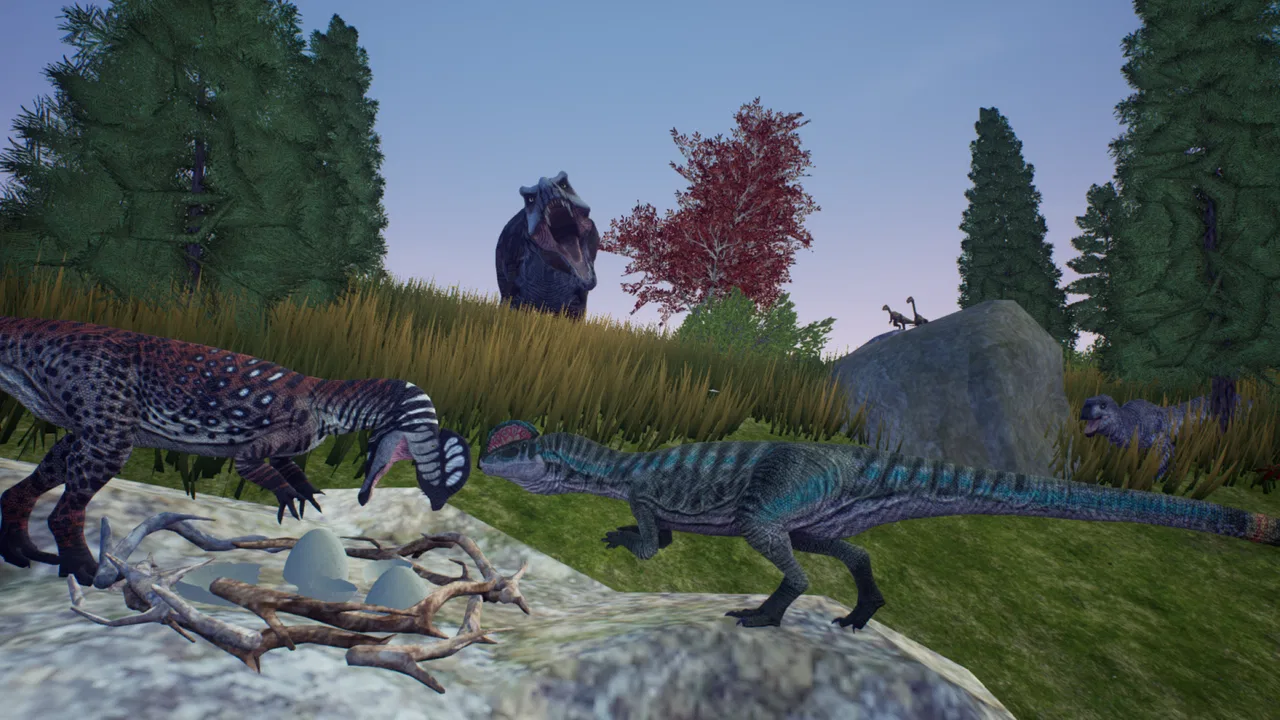
The Cursed Dinosaur Isle is a dinosaur survival and simulation game in which you explore a mysterious island, grow your dinosaur, search for food, and try to survive against environmental dangers and other prehistoric creatures. The game combines exploration, progression, and light role-playing elements, allowing you to unlock stronger dinosaurs and experience different parts of the island as you advance.
02Can I play The Cursed Dinosaur Isle offline?
The game may allow some gameplay features to work without a constant internet connection, particularly basic exploration and progression. However, online access can be required for advertisements, cloud-related functions, updates, events, or other connected features. For the most reliable experience, it is recommended to launch the game while connected to the internet and check its current requirements on the Google Play Store or App Store.
03Is The Cursed Dinosaur Isle free to download and play?
The Cursed Dinosaur Isle is generally available as a free download, but it may include optional in-app purchases and advertising. These purchases can sometimes help players progress faster, obtain resources, or unlock content more conveniently. You can usually play without spending money, although progression may require more patience. Parents should also review purchase settings before allowing children to play.
04What dinosaurs can I use in The Cursed Dinosaur Isle?
The game features a selection of prehistoric dinosaurs that players can control or unlock as they progress. Available creatures may include different herbivores and carnivores, each with their own appearance, abilities, survival requirements, and progression path. The exact roster can change with updates, so players should expect additional dinosaurs, balance changes, or new content depending on the version installed.
05Does The Cursed Dinosaur Isle run well on every Android or iPhone?
Performance depends on your device’s processor, memory, operating-system version, and available storage. The game includes a 3D island environment, animated dinosaurs, and visual effects, so older or entry-level phones may experience slower loading, reduced frame rates, or battery drain. Before downloading, check the store listing for compatibility, keep enough free space available, and lower graphics settings if the game provides that option.
Pros
- Relaxing island-building gameplay with a charming prehistoric theme.
- Many dinosaur species to collect
- hatch
- and upgrade over time.
- Exploration adds variety beyond decorating and managing your island.
- Simple controls make it accessible for younger and casual players.
- Frequent tasks and rewards provide clear short-term goals.
Cons
- Progress can feel slow without spending premium currency.
- Energy limits may interrupt longer exploration sessions.
- Some upgrades and items rely heavily on random rewards.
- The gameplay loop may become repetitive after extended play.
- Ads and in-app purchases can affect the otherwise relaxing experience.

The Cursed Dinosaur Isle: Game
Gallery